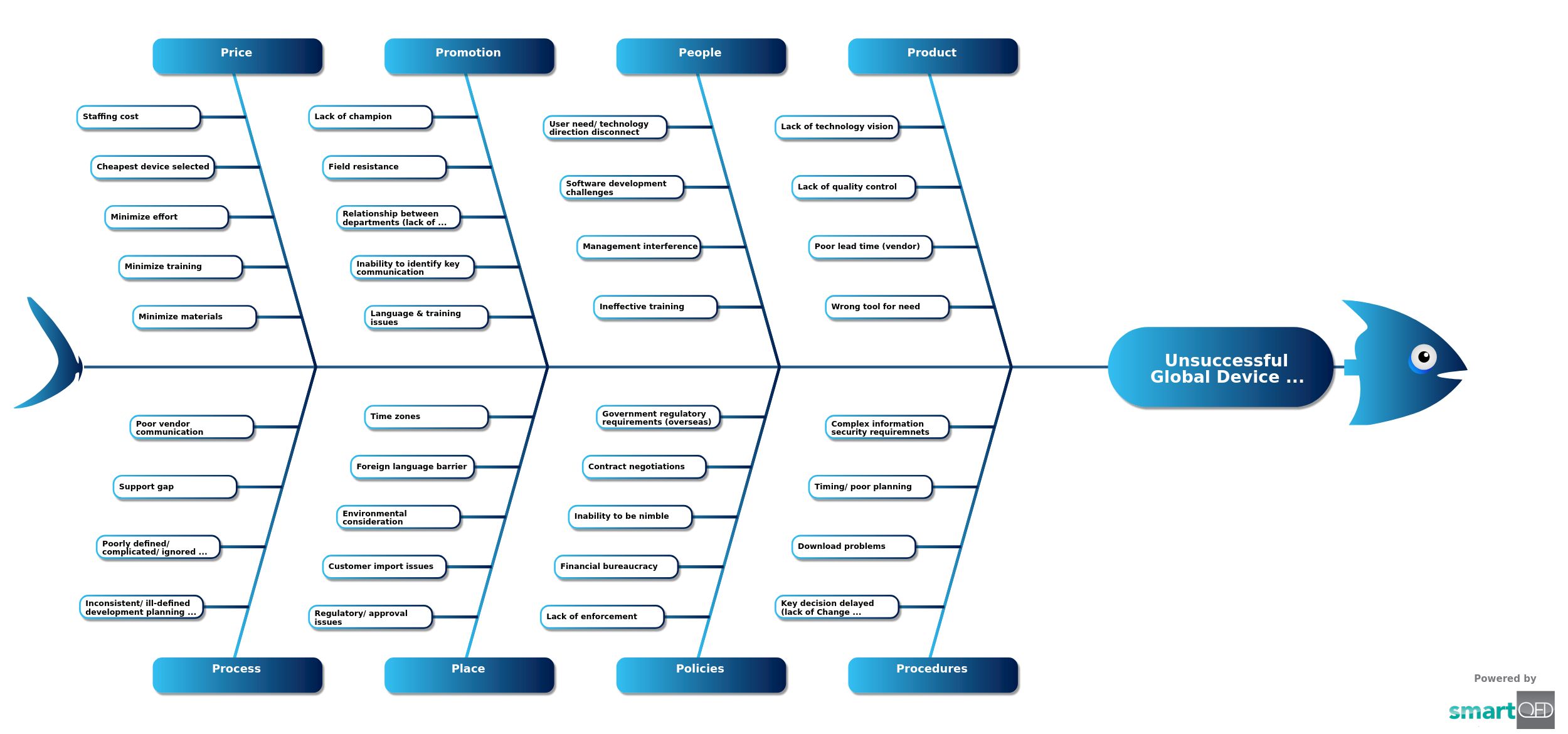
Unsuccessful global device implementation can result from various factors, often stemming from challenges in planning, execution, and adaptation. Global implementation procedure would likely face significant regulatory challenges, with different countries having varying laws and standards. Introducing a global device could have cultural and social consequences, influencing how people interact, communicate, and conduct various aspects of their lives. In any scenario, implementing a global device would require careful consideration of its purpose, ethical implications, security measures, and collaboration with various stakeholders, including governments, businesses, and the public.
Unsuccessful Global Device Implementation
Product
- Lack of technology vision
- Lack of quality control
- Poor lead time (vendor)
- Wrong tool for need
Procedures
- Key-decision delayed (lack of Change Control Board)
- Download problems
- Timing/ poor planning
- Complex information security requirements
People
- User need/ technology direction disconnect
- Software development challenges
- Management interference
- Ineffective training
Policies
- Lack of enforcement
- Financial bureaucracy
- Inability to be nimble
- Contract negotiations
- Government regulatory requirements (overseas)
Promotion
- Lack of champion
- Field resistance
- Relationship between departments (lack of trust)
- Inability to identify key communication
- Ignore training
- Language barrier
Place
- Regulatory/ approval issues
- Customer import issues
- Environmental consideration
- Foreign language barrier
- Time zones
Price
- Staffing cost
- Cheapest device selected
- Minimize effort
- Minimize training
- Minimize materials
Process
- Inconsistent/ ill-defined development planning steps
- Poorly defined/ complicated/ ignored execution steps
- Support gap
- Poor vendor communication
Root cause analysis is a valuable process that helps us identify the underlying factors behind any problems or issues we face. By understanding these causes, we can take proper action to address them and prevent recurrence.
Who should use the Unsuccessful Global Device Implementation template?
- Anyone who wants to look into the reasons for unsuccessful global device implementation.
Why use this template?
- This fishbone is an example of a visual root cause analysis. This diagram describes the main reasons for the failure of global device implementation.
- Anyone can modify the structure or extend the template in the ProSolvr environment while investigating the problem.
- Draft or customize your templates for problem analysis in ProSolvr by smarQED.
Curated from community experience and public sources: