The introduction of Autonomous Vehicles (AVs) is poised to revolutionize urban transportation infrastructure, offering both opportunities and challenges. AVs do have the potential to optimize traffic flow, reduce congestion, and improve overall efficiency in urban mobility. However, their integration requires significant adaptations to existing infrastructure, including roadways, traffic signals, and communication systems. Urban planners must consider features like their compatibility with road markings, dedicated lanes, and robust communication networks to support safe and efficient AV operations. Additionally, AVs may necessitate changes in urban design, such as reimagining parking structures and curbside management to accommodate AV pick-up/drop-off zones. While AVs hold promise for enhancing accessibility and reducing emissions, their widespread adoption hinges on addressing regulatory, technological, and societal concerns. Collaborative efforts among policymakers, transportation authorities, industry stakeholders, and communities are essential to realize the full potential of AVs in shaping the future of urban transportation infrastructure.
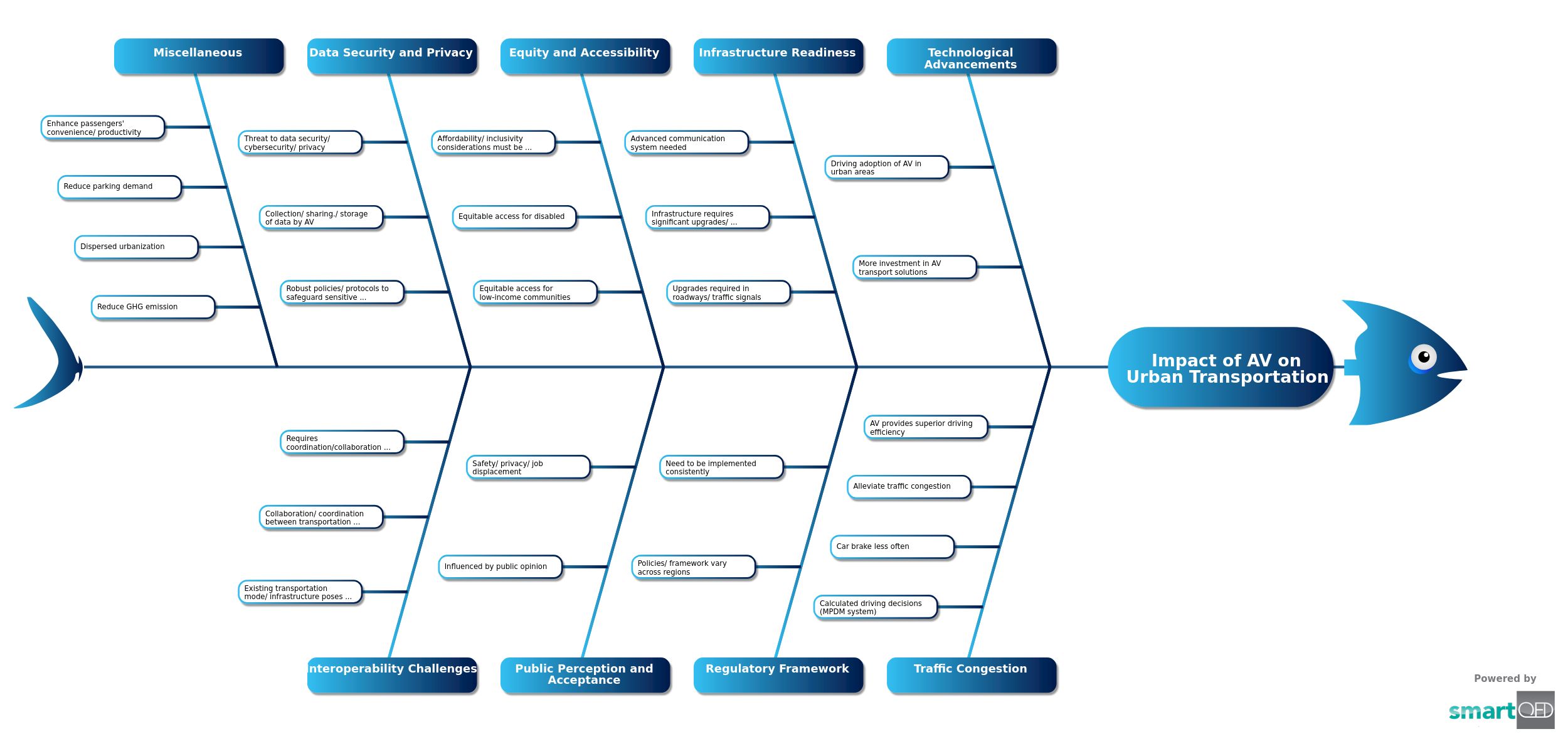
Impact of Autonomous Vehicle on Urban Transportation
Technological Advancements
- Driving adoption of AV in urban areas
- More investment in AV transport solutions
Traffic Congestion
- Calculated driving decisions (MPDM system)
- Car brake less often
- Alleviate traffic congestion
- AV provides superior driving efficiency
Infrastructure Readiness
- Advanced communication system needed
- Infrastructure requires significant upgrades/ investments
- Upgrades required in roadways/ traffic signals
Regulatory Framework
- Policies/ framework vary across regions
- Need to be implemented consistently
Equity and Accessibility
- Affordability/ inclusivity considerations must be addressed
- Equitable access for disabled
- Equitable access for low-income communities
Public Perception and Acceptance
- Influenced by public opinion
- Safety/ privacy/ job displacement
Data Security and Privacy
- Threat to data security/ cybersecurity/ privacy
- Collection/ sharing./ storage of data by AV
- Robust policies/ protocols to safeguard sensitive information
Interoperability Challenges
- Existing transportation mode/ infrastructure poses challenges
- Collaboration/ coordination between transportation authorities
- Requires coordination/collaboration with AV manufacturers
Miscellaneous
- Enhance passengers’ convenience/ productivity
- Reduce parking demand
- Dispersed urbanization
- Reduce GHG emission
Who should use the Impact of Autonomous Vehicle on Urban Transportation template?
- Those interested in the impact of Autonomous Vehicles (AVs) on Urban Transportation should read this.
- The RCA Fishbone diagram is crucial for urban planners, transportation management, policymaking, and infrastructure development stakeholders. to assess the impact of autonomous vehicles (AVs) on urban transportation infrastructure.
Why use this template?
- The Fishbone diagram provides a systematic framework for organizing and categorizing potential factors influencing the impact of AVs on urban transportation infrastructure, ensuring a comprehensive analysis.
- Involving various stakeholders, including urban planners, transportation authorities, engineers, policymakers, and community members, in the RCA process fosters collaboration and knowledge sharing, leading to a more holistic understanding of the issues.
- Documenting findings, corrective actions, and preventive measures facilitates ongoing monitoring and evaluation of AV integration efforts, supporting continuous improvement in urban transportation infrastructure planning and management.
- The Fishbone diagram helps prioritize areas for intervention by identifying the most influential root causes, enabling stakeholders to develop targeted solutions and action plans to address infrastructure challenges or leverage opportunities presented by AVs.
Curated from community experience and public sources: