
Reasons for aircraft ground collision while take-off
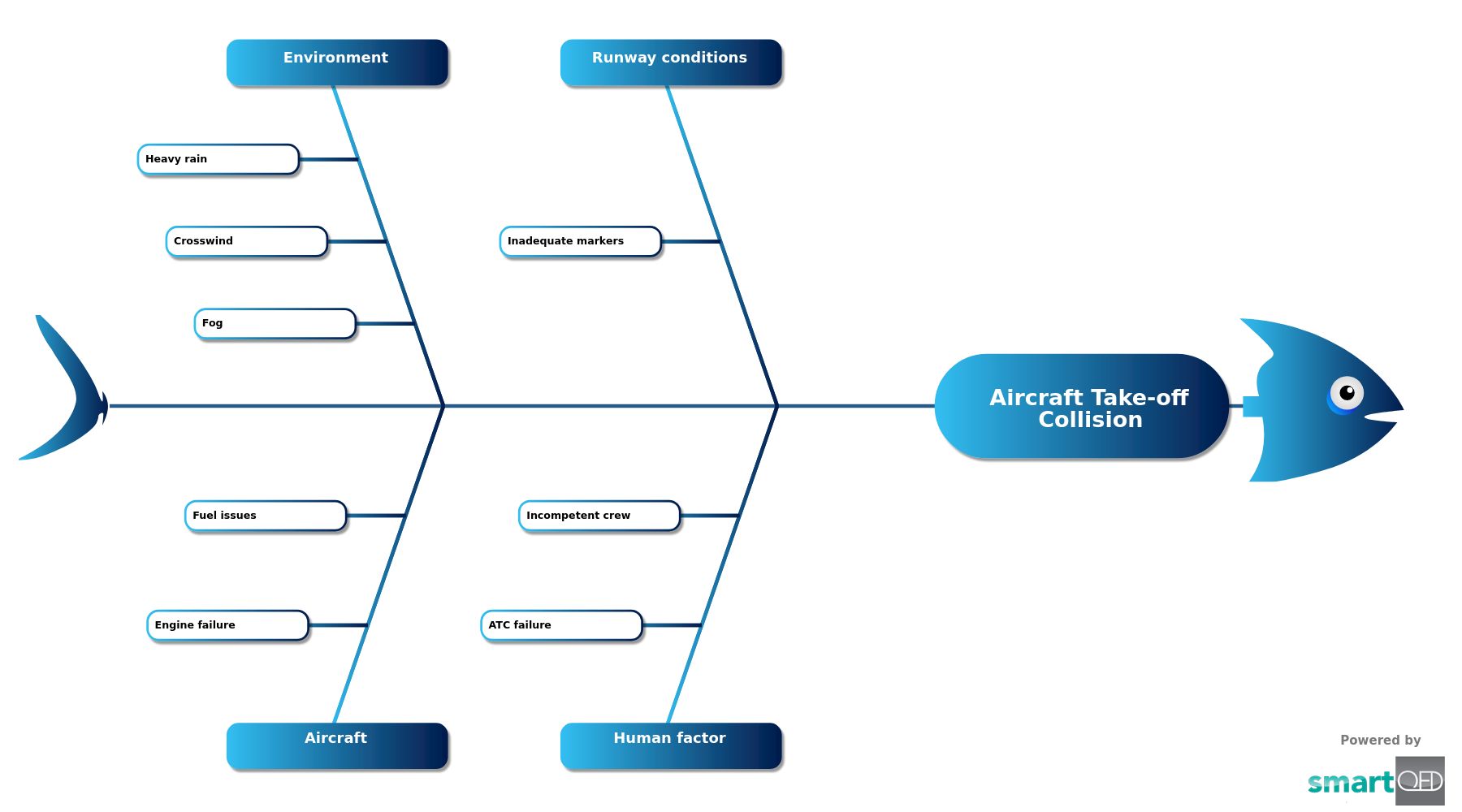
Aircraft take-off collision is among the most disastrous aviation accidents. Ground collision (GCOL) refers to a crash that happens when an airplane is moving on the ground to or from a runway that is in use. Accidents involving collisions with aircraft, people, ground vehicles, obstacles, buildings, or structures are rare due to strict regulations and safety measures. However, when they do occur, they can have serious consequences. Authorities conduct a thorough investigation to determine the causes and contributing factors of such incidents. The safety measures need significant improvements, including more precise and standardized communication between the control tower and the cockpit.
Aircraft Take-off Collision
Runway conditions
Human factor
Environment
Aircraft
A structured visual cause analysis is always easy to understand. This fishbone shows a systematic root cause analysis for airplane crashes due to collision with other aircraft. It shows the possible factors that made the aircraft collide on the runway. One can study this template thoroughly to acquire knowledge of the contributing causes.
This fishbone is advantageous for anyone who wants to know why an aviation accident occurs due to ground collision in take-off.
Curated from community experience and public sources: